
Protect Your Heart:
Learn About Cardiovascular Disease Today!
Discover essential tips and strategies to safeguard your heart health. Learn about lifestyle changes, risk factors, and proactive measures to reduce the risk of heart disease.
Book Your Screening With Us
Fill in your details below and we will get in touch with you
Are you experiencing any of
the following symptoms?
Be vigilant about your heart health. Check for common symptoms such as chest pain, shortness of breath, fatigue, dizziness, and irregular heartbeat. Early detection can save lives.
Dizziness
Lightheadedness is usually caused by decreased blood flow to the brain, the heart’s impaired ability to effectively pump blood, and heart medications.
Shortness of Breath
Also known as dyspnea, this sensation of difficulty breathing can range from mild to severe, and may occur during physical exertion or even at rest.
Chest Pain
Chest pain can vary in intensity and duration, lasting for a few minutes to prolonged periods. It may be triggered by physical exertion or emotional stress.
Fatigue
This persistent tiredness often worsens during physical exertion and may be an indication of underlying cardiovascular issues that require treatment.
- Dizziness
Lightheadedness is usually caused by decreased blood flow to the brain, the heart’s impaired ability to effectively pump blood, and heart medications.
Dizziness
Lightheadedness is usually caused by decreased blood flow to the brain, the heart’s impaired ability to effectively pump blood, and heart medications.
- Chest Pain
Chest pain can vary in intensity and duration, lasting for a few minutes to prolonged periods. It may be triggered by physical exertion or emotional stress.
Chest Pain
Chest pain can vary in intensity and duration, lasting for a few minutes to prolonged periods. It may be triggered by physical exertion or emotional stress.
- Shortness of Breath
Also known as dyspnea, this sensation of difficulty breathing can range from mild to severe, and may occur during physical exertion or even at rest.
Shortness of Breath
Also known as dyspnea, this sensation of difficulty breathing can range from mild to severe, and may occur during physical exertion or even at rest.
- Fatigue
This persistent tiredness often worsens during physical exertion and may be an indication of underlying cardiovascular issues that require treatment.
Fatigue
This persistent tiredness often worsens during physical exertion and may be an indication of underlying cardiovascular issues that require treatment.
Consultant Interventional Cardiologist & Physician
DR LESLIE TAY
Over 20 Years of Experience
Interventional Cardiologist with expertise in managing patients with complex coronary artery disease
Highly Personalised Diagnosis & treatment
Treat Complex Heart Conditions

Cardiovascular Disease Is The Number One Cause Of Death In Singapore And Worldwide.

20%
of heart attacks are silent
30%
of deaths in Singapore and worldwide are attributed to heart disease or stroke
80%
of cardiovascular disease can be prevented
Screening Packages
From basic assessments to advanced screenings, our range of packages provide you with thorough insights into your health status.
Click image to view
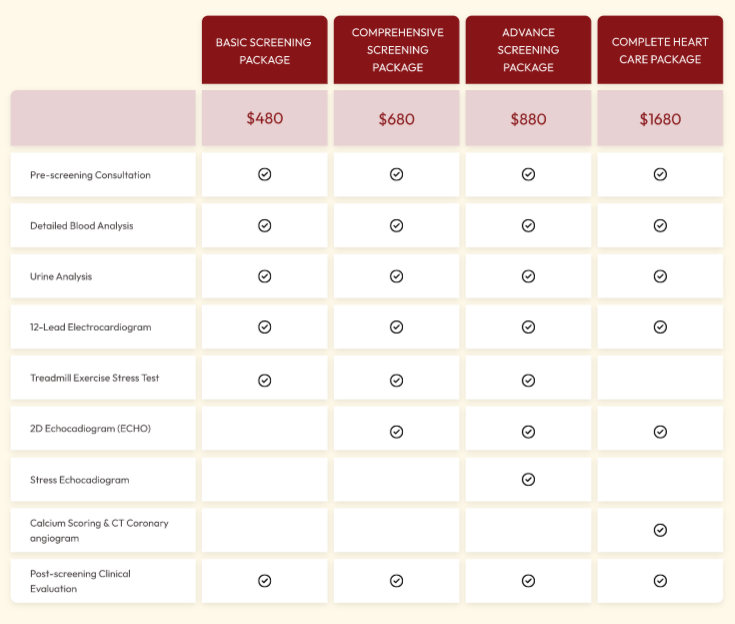
BASIC SCREENING PACKAGE
COMPREHENSIVE SCREENING PACKAGE
ADVANCE SCREENING PACKAGE
COMPLETE HEART CARE PACKAGE
$480
$680
$880
$1680
Pre-screening Consultation
Detailed Blood Analysis
Urine Analysis
12-Lead Electrocardiogram
Treadmill Exercise Stress Test
2D Echocadiogram (ECHO)
Stress Echocadiogram
Calcium Scoring & CT Coronary angiogram
Post-screening Clinical Evaluation
What to expect on your first visit
Have a fruitful session with your cardiologist by coming prepared. Here are some materials you are advised to bring along and ways you can prepare for your appointment.
1
Prepare a list of your current medications
This ensures that your cardiologist has a complete understanding of the medications you are currently taking, in order to assess potential drug interactions, side effects and risks.
2
Prepare a list of your healthcare providers
This lets your cardiologist know which healthcare providers you have already seen and which treatments/tests you have already undergone, avoiding unnecessary duplication of efforts, tests or procedures.
3
Prepare a list of your past health history
This data provides valuable context for your cardiologist to understand your overall health status, to assess your cardiovascular risk factors and come up with a tailored approach that suits your specific needs.
4
Compile your family’s health history, including close blood relatives
This information aids in the early detection of hereditary conditions, enabling your cardiologist to identify potential risk factors and develop personalised prevention strategies.
1
Prepare a list of your current medications
This ensures that your cardiologist has a complete understanding of the medications you are currently taking, in order to assess potential drug interactions, side effects and risks.
2
Prepare a list of your healthcare providers
This lets your cardiologist know which healthcare providers you have already seen and which treatments/tests you have already undergone, avoiding unnecessary duplication of efforts, tests or procedures.
3
Prepare a list of your past health history
This data provides valuable context for your cardiologist to understand your overall health status, to assess your cardiovascular risk factors and come up with a tailored approach that suits your specific needs.
4
Compile your family’s health history, including close blood relatives
This information aids in the early detection of hereditary conditions, enabling your cardiologist to identify potential risk factors and develop personalised prevention strategies.
Integrated Shield Plans:
Corporate Insurance Plans:
FAQs
QUESTIONS YOU MIGHT ASK
What is a heart attack?
A heart attack, or myocardial infarction, occurs when a coronary artery becomes completely blocked due to a blood clot or arterial plaque. Part of the heart muscle dies due to oxygen deprivation, and this gives rise to the crushing chest pain characteristic of a heart attack.
What are the symptoms of heart attack?
- Shortness of breath
- Palpitations (irregular heartbeats)
- Quickened heartbeat
- Weak spells or dizziness
- Nausea
- Sweating
- Unusual tiredness, sometimes for days
What is arrhythmia?
Arrhythmias are abnormal heart rhythms that are produced when the natural electrical conduction system of the heart malfunctions. Not all arrhythmias pose health risks. For instance, a temporary arrhythmia caused by alcohol, caffeine, or insomnia is not usually a cause for concern.
When do I need to see a cardiologist?
- Heart pain – You may be feeling severe pressure, squeezing, pain or discomfort in the chest or a chest pain that becomes more intense. If you have any doubt about whether you are experiencing a symptom, please have it checked out by a cardiologist.
- Breathless – You may experience shortness of breath or a reduction in what you were previously able to do. This may be a sign of heart disease.
- Palpitation – You may feel a fast or irregular heartbeat. This may be associated with dizziness or fainting spells. This may indicate an underlying arrhythmia.
- Family history – If anyone in your family has or has had heart problems, you should be aware of heart disease symptoms and consider talking to a cardiologist about them or perform an annual heart screening to ensure your vitals are in the healthy range.
- High total cholesterol – Total cholesterol is the sum of all the cholesterol in your blood. The higher your total cholesterol, the greater your risk for heart disease (a cholesterol level of 200 mg/dL or higher, or an LDL of 130mg/dL or higher).
- High blood pressure – You have high blood pressure or a high systolic number. The systolic number on your blood pressure reading is the first number. (For example, if your reading is 120/80 (120 over 80), your systolic blood pressure is 120.).
- Starting a new exercise program – You are over the age of 40 and starting a new exercise program. You may already be working with a doctor on being more active, but a cardiologist can check your heart health and recommend exercises that would be good for your heart.
How do I make an appointment?
We want to make sure our cardiologist has sufficient time to speak with you and review your condition. As such, you are highly encouraged to make an appointment either through calling us at 6262 0677 or email us at dr@leslietayheart.com.sg
What to expect during the heart screening consultation?
During the initial consultation, a thorough and detailed review of your medical history and presenting concerns will be conducted, and a physical examination will be performed. Please bring along any previous blood test or health screening results and any investigation reports you may have so tests do not need to be repeated unnecessarily.
Dr Tay will assess your cardiovascular status and issues and he will recommend the most appropriate investigations for your condition.
After your tests are performed, the results and a detailed management plan will be discussed with you to optimise your heart health. This may include lifestyle management changes including diet and exercise prescriptions. If necessary, further tests, medication prescriptions, or cardiac surgery will be discussed.
Get In Touch With Us
Whether you have questions, require assistance or want to schedule your next appointment, we are here to help.
Our Clinic
38 Irrawaddy Road #08-51 Mount Elizabeth Novena Specialist Centre Singapore 329563
Call Us
(65) 6262 0677
+65 87813488
Fax Number
(65) 6962 5277
 Leslie Tay Heart